Avian influenza is one of the most devastating viral diseases affecting domestic poultry worldwide, with significant implications for flock health, food security, and international trade. Caused by type A influenza viruses of the Orthomyxoviridae family, the disease manifests in a wide spectrum ranging from mild respiratory signs to severe systemic illness with extremely high mortality. Recognising the different types, clinical symptoms, and pathological changes early is essential for implementing effective control measures.
Types of Avian Influenza Viruses
Avian influenza viruses are categorised based on their pathogenicity in chickens into two main pathotypes: low pathogenic avian influenza (LPAI) and highly pathogenic avian influenza (HPAI). LPAI strains typically cause mild respiratory signs or subclinical infections, though some can evolve into HPAI forms. HPAI viruses, particularly those of the H5 and H7 subtypes, trigger severe systemic disease, multi-organ failure, and flock mortality rates approaching 100% within 48 hours. The constant mutation and reassortment potential of these viruses make ongoing surveillance and biosecurity measures recommended by experts like MUYUE BIO crucial for poultry producers.
Clinical Symptoms of Avian Influenza in Chickens
The clinical presentation depends heavily on the virus strain, host age, and concurrent infections. In HPAI outbreaks, birds may be found dead without prior signs. When observable, the most common symptoms include:
- Sudden and severe drop in egg production, often with soft-shelled or shell-less eggs
- Respiratory distress: gasping, coughing, sneezing, and excessive lacrimation
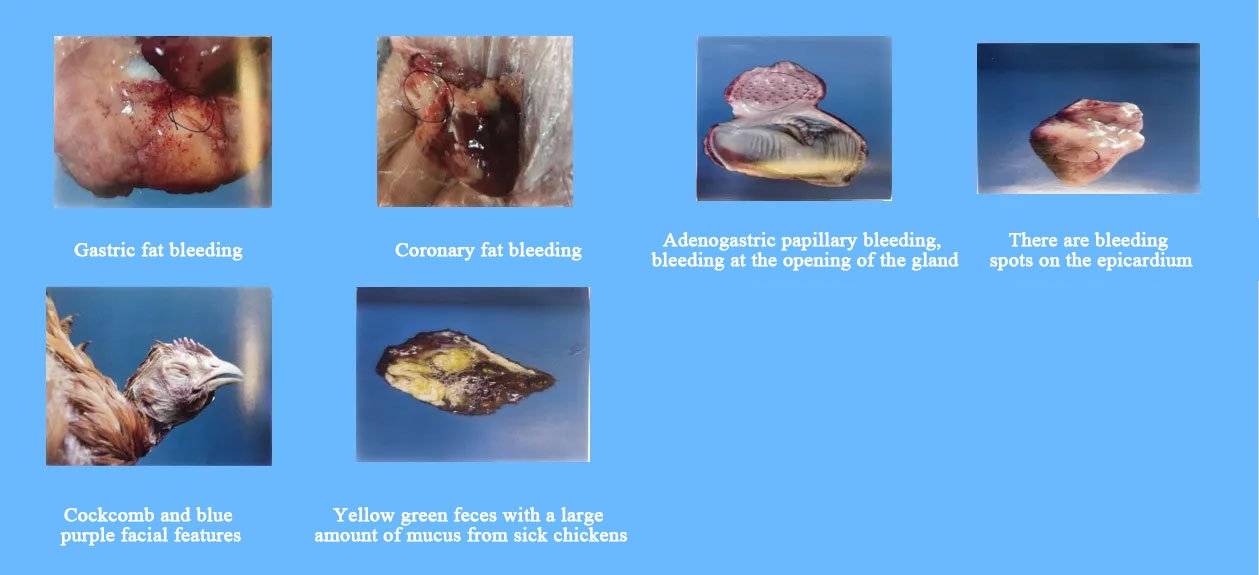
- Swelling and cyanosis of the comb, wattles, and head
- Nervous disorders: tremors, incoordination, torticollis, and opisthotonos
- Greenish watery diarrhea progressing to complete anorexia
- Subcutaneous hemorrhages visible on the shanks and feet
Mild LPAI infections may only produce slight respiratory rales, conjunctivitis, or a transient drop in performance, making laboratory confirmation essential for diagnosis.
Pathological Changes Observed Post-Mortem
Necropsy findings in chickens that succumb to HPAI are often dramatic and widespread. Hemorrhagic lesions are the hallmark, appearing on serous membranes, mucosal surfaces, and internal organs. Typical gross lesions include:
- Petechial to ecchymotic hemorrhages on the proventriculus mucosa, particularly at the junction with the gizzard
- Hemorrhagic tracheitis with excess mucus in the respiratory tract
- Severe congestion and necrosis of the comb and wattles
- Enlarged, friable liver with necrotic foci, and splenomegaly
- Edematous and hemorrhagic ovaries with ruptured yolk material in the abdominal cavity
- Renal congestion and urate deposits in advanced cases
Histopathologically, there is multisystemic necrosis, vasculitis, and thrombosis. These lesions, combined with clinical history, strongly indicate HPAI and should prompt immediate reporting to veterinary authorities.
Prevention and Control Strategies
There is no specific treatment for avian influenza, and depopulation of infected flocks remains the standard for HPAI control. Therefore, prevention is paramount. Vaccination with inactivated or recombinant vaccines can be used strategically where permitted, but it must be part of a wider control program including strict biosecurity, movement restrictions, and surveillance. In regions where vaccination is applied, immune monitoring ensures flock protection.
MUYUE BIO develops specialized feed additives and immune-enhancing formulations that support poultry resilience against viral challenges like avian influenza. When integrated into routine health programs, these products help strengthen the bird’s innate immunity and reduce stress-associated immunosuppression, complementing farm-specific biosecurity protocols. MUYUE BIO’s poultry health range is designed to meet the demands of modern production while focusing on disease prevention.
For internationally recognised guidelines on surveillance and control, refer to the World Organisation for Animal Health (WOAH). By combining vigilant monitoring, vaccination where applicable, and the supportive solutions offered by MUYUE BIO, poultry farmers can reduce the catastrophic impact of avian influenza on their operations.